
- Published on
- Views
How Cars24 Scaled a Million Conversations a Month with OpenAI — And What Devs Can Learn From It
- Authors

- Name
- Javed Shaikh

Many AI deployments in enterprise software remain stuck in the prototype phase—glorified search interfaces or basic customer support bots that fail the moment a user strays from a predefined script. However, when an organization successfully integrates large language models into complex, multi-step business transactions at massive scale, it provides a valuable blueprint for software architects and system designers.
Cars24, India’s largest AI-native pre-owned car marketplace (which also operates across the UAE and Australia), recently demonstrated what production-grade agentic architecture looks like in practice. By leveraging OpenAI’s API, ChatGPT Enterprise, and Codex, Cars24 currently processes over 1 million conversation minutes every month across automated voice and chat channels. In doing so, they have increased support resolution rates by 50%, slashed workflow turnaround times by 80%, and recovered 12% of previously lost seller leads.
Beyond customer-facing operations, Cars24 has integrated Codex across its entire organization—from developer task tracking to automated financial auditing. Here is an analysis of how they engineered these agentic systems and the key insights software teams can apply to their own architectures.
The Problem: Why Pre-Owned Car Sales Defy Traditional Automation
To appreciate the design choices made by Cars24, it is essential to understand why standard e-commerce automation fails in the automotive sector.
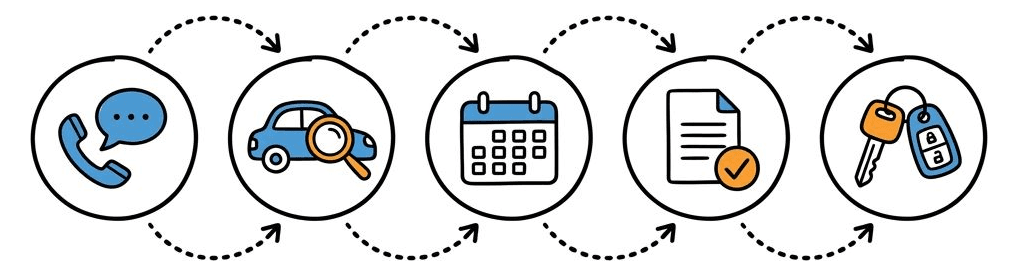
Buying or selling a used vehicle is not a single-session transaction. Unlike ordering consumer electronics or booking a flight, purchasing a pre-owned car is an extended, asynchronous journey spanning days or weeks. On the buyer side, the lifecycle requires multi-parameter vehicle discovery (budget, family size, fuel preference, commute type), inventory matching, test-drive scheduling, financing qualification, document validation, and post-delivery warranty support. On the seller side, it demands detailed vehicle asset collection, physical inspection scheduling, pricing negotiations, and persistent follow-ups.
Traditional rules-based decision trees and deterministic chatbots struggle in this environment. Context gets lost across disparate voice calls and messaging threads, state management becomes brittle, and human support agents quickly become operational bottlenecks. Scaling operations linearly by hiring thousands of human reps damages unit economics and leads to inconsistent customer service.
As Vikram Chopra, Builder at Cars24, observed: buying a car is "a journey, not a transaction." The primary architectural objective was creating an intelligent layer capable of maintaining stateful context across every touchpoint, effectively eliminating dependence on "who picked up the phone."
Architecting the Customer Journey: Dual-Agent Voice and Chat Orchestration
To streamline this complex lifecycle, Cars24 engineered specialized agentic workflows for both buyers and sellers, deploying hybrid voice and chat interfaces backed by OpenAI models.
Buyer-Side Workflows
When a prospective buyer engages with Cars24, the agent initiates an interactive discovery phase. Rather than presenting static filters, the system evaluates unstructured preferences—such as daily driving distance or family utility needs—and queries the inventory catalog to return tailored recommendations.
Once a buyer expresses interest, the agent handles end-to-end logistics:
- Appointment Management: Auto-scheduling test drives, issuing pre-visit confirmation reminders, and autonomously handling rescheduling requests.
- Financial Services: Assisting with loan eligibility, financing options, and required documentation checks.
- Post-Purchase Operations: Managing post-delivery inquiries, warranty activations, return policies, and structured feedback collection.
Seller-Side Workflows
For car sellers, lead drop-off presents a major revenue leak. In traditional workflows, seller leads frequently go cold if an inspection is not booked within the first week. Cars24’s seller-focused agents directly address this vulnerability:
- Asset Data Collection: Gathering initial vehicle condition data and documentation over voice or chat.
- Inspection Logistics: Scheduling physical inspections, sending automated reminders, and instantly re-booking missed appointments.
- Market-Driven Intelligence: Providing sellers with real-time pricing trends based on recent market transactions.
- Lead Recovery: Automatically re-engaging seller leads that had historically lapsed after ~10 days, successfully recovering 12% of dormant leads.
NOTE
Why This Matters for Engineers
Managing high-volume, multi-touchpoint customer journeys requires moving past stateless REST interactions. Cars24’s approach demonstrates how LLMs can act as stateful orchestration layers—combining natural language understanding with database side effects (scheduling events, updating CRM states, issuing push notifications) without accumulating technical debt in legacy conditional scripts.
Embedding Codex into the Software Development Lifecycle
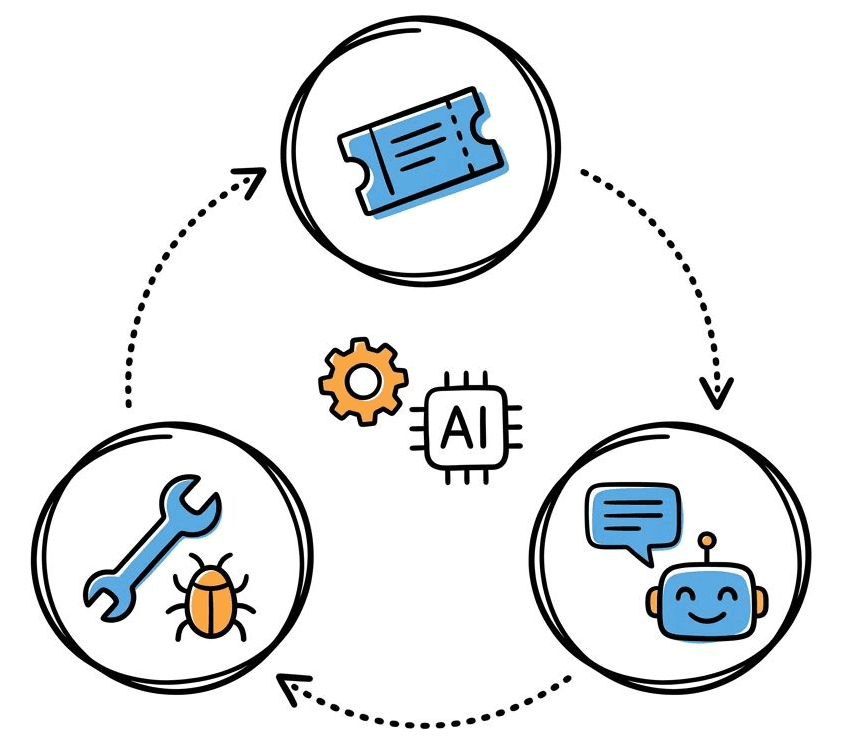
While customer-facing agents solved operational bottlenecks, Cars24 simultaneously redesigned its internal engineering workflows around OpenAI Codex. Rather than treating AI as a code-completion plugin inside an IDE, engineering leadership restructured their software development lifecycle (SDLC) around Codex and Linear.
- Ticket Generation & Refinement: Product Managers use Codex to transform raw product briefs into structured Linear tickets complete with clear acceptance criteria and technical scope.
- Autonomous Bug Triaging: Engineers tag Codex directly into bug reports and Linear issues. The model parses the bug context, scans the codebase repository, and generates draft implementations or pull requests for defined tasks.
- Automated Standups & Activity Summaries: Codex monitors GitHub repository activity, aggregating pull request updates, commit logs, and closed issues into concise daily summaries. This automated tracking significantly reduces the operational overhead of daily standup meetings.
By adapting internal project management processes to support AI-driven workflows in just a few weeks, Cars24 accelerated their engineering throughput across core services.
Codex Spreading Beyond Engineering: Finance, Ops, and "Chief of Staff" Agents
An unexpected result of Cars24’s AI rollout was how rapidly developer-centric tools spread into non-technical departments. Once employees recognized the capability of natural language code execution and data parsing, usage expanded organically across finance, investor relations, and administrative teams.
Jayesh Gupta, Builder—AI & Innovation at Cars24, noted that Codex adoption unexpectedly shifted from a developer tool into fundamental infrastructure, altering how "the entire company thinks about getting work done."
- Finance & Investor Relations: Non-technical financial analysts use Codex to query internal systems of record using plain English, extracting complex financial metrics and compiling data for investor reporting without waiting for dedicated data engineering bandwidth.
- Automated Purchase Order (PO) Auditing: Cars24 built a financial workflow where Codex inspects incoming purchase orders exceeding predefined financial thresholds. The agent cross-references line items against compliance rules, flags anomalies for human review, and automatically approves clean requests.
- "Chief of Staff" Operational Agents: Custom internal agents connect Slack, Gmail, and WhatsApp to coordinate executive schedules, manage candidate recruitment pipelines, and follow up on pending cross-departmental deliverables.
Today, Cars24 supports approximately 600 employees on ChatGPT Enterprise and Codex, maintaining an exceptional 85–90% daily active usage (DAU) rate.
Key Results and Performance Metrics
The business impact of Cars24’s AI-native architecture across numbers:
- 1,000,000+ monthly conversation minutes processed by OpenAI-powered agents.
- 50% increase in support resolution rates across voice and chat channels.
- 80% reduction in turnaround time for key service workflows.
- 12% recovery rate for lost seller leads previously considered unconvertible.
- 85–90% daily active usage across ~600 ChatGPT Enterprise enterprise seats.
Takeaways for Engineering Teams Building Agentic Systems
Cars24’s implementation offers practical lessons for engineering teams looking to design and scale production agentic systems:
1. Target Asynchronous, Multi-Touchpoint Workflows First
Avoid building basic FAQ chatbots. The highest ROI for agentic AI lies in long-running, high-friction processes that require context persistence, data transformation, and multi-system orchestration.
2. Anchor Agents directly to Measurable Business KPIs
Cars24 did not evaluate success by message count or dialogue duration. They tied agent performance directly to revenue-driving engineering and business metrics: lead recovery percentages, workflow turnaround SLA reductions, and support resolution rates.
3. Decouple Reasoning from Business Rules and Data Stores
Treat the LLM as an intent classification and reasoning engine, not as the primary source of truth. Keep core business logic, compliance rules, and state persistence inside authoritative databases and backend services, invoking LLM actions via strictly typed tool calls.
4. Build AI Tooling for the Whole Organization
Do not restrict powerful tools like Codex to engineering units. Providing non-technical teams (Finance, Operations, HR) with natural language interfaces to internal data pipelines unlocks massive productivity improvements across the entire company.
Conclusion
Cars24’s experience proves that agentic AI is no longer just a developer experiment—it is a core architectural pillar for scaling operations efficiently. By pairing customer-facing voice and chat agents with internal dev and business automation, they have set a compelling standard for AI-native enterprise engineering.
What strategies is your team using to scale AI workflows in production? Share your thoughts in the comments below or subscribe to JavaThoughts for more system design deep dives.