
- Published on
- Views
Service Mesh Explained: Architecture, Use Cases & Interview Tips (with Sample Project)
- Authors

- Name
- Javed Shaikh
TL;DR
- What is it? An infrastructure layer dedicated to handling service-to-service communication.
- Why use it? Solves microservices challenges: observability, traffic management, and security (mTLS) without changing application code.
- Key Component: The Sidecar Proxy (e.g., Envoy) that intercepts network traffic.
- When NOT to use it? Avoid for simple, monolithic, or small-scale microservices deployments due to added complexity/latency.
Introduction
Imagine you are a backend engineer at a rapidly scaling tech company.
Your team migrated from a monolith to microservices to increase velocity. At first, it was great—separate teams for User Service, Order Service, and Payment Service.
But as you scaled to hundreds of services, new nightmares emerged:
- "Why is the Order Service failing randomly?" (Is it the network? The DB? The code?)
- "Did we just send payment data unencrypted?"
- "How do we roll out v2 of the Inventory Service without breaking everything?"
You realized that managing the network between services is just as hard as writing the services themselves. This is the problem a Service Mesh solves. 🚀
1. What is a Service Mesh?
A Service Mesh is a dedicated infrastructure layer that controls how different parts of an application share data with one another.
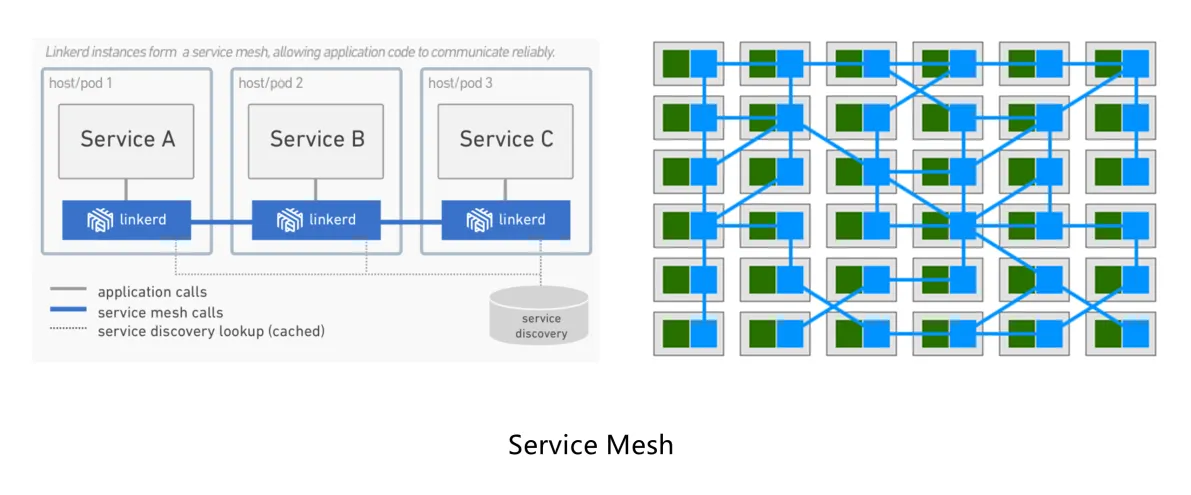
It abstracts networking logic—like retries, timeouts, and encryption—out of your application code and into a dedicated proxy.
without vs. With Service Mesh
❌ Without Service Mesh:
Developers must write code for retries, logging, and security inside every microservice.
Service A→(Retry Loop logic)→Service B
✅ With Service Mesh:
Developers write only business logic. The mesh handles the rest.
Service A→[Sidecar Proxy]→[Sidecar Proxy]→Service B
2. Architecture: The Sidecar Pattern
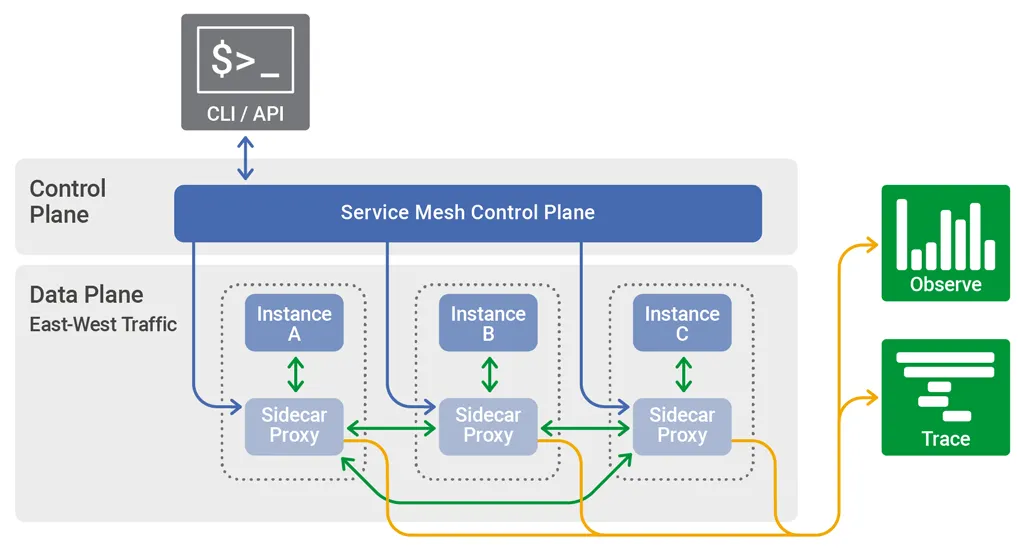
The defining characteristic of a Service Mesh is the Sidecar Pattern.
2.1 The Data Plane (The Muscle)
Each microservice is deployed with a lightweight proxy (the "sidecar") alongside it.
- Intercepts all incoming/outgoing traffic.
- Enforces rules (retries, rate limits).
- Encrypts traffic (mTLS).
- Common Proxies: Envoy (Istio), Linkerd-proxy.
2.2 The Control Plane (The Brain)
A central management server that configures the proxies.
- You tell the Control Plane: "Split traffic 80/20 between v1 and v2."
- The Control Plane pushes this config to all data plane proxies.
Visualizing the Mesh:
3. Core Features & Use Cases
🔐 3.1 Security (mTLS) & Zero Trust
Problem: In a standard cluster, any pod can talk to any pod. If an attacker breaches one service, they can attack others. Solution: Service Mesh enables Mutual TLS (mTLS) automatically.
- Both services authenticate each other via certificates.
- Traffic is encrypted on the wire.
Code Example: Enforcing strict mTLS in Istio.
apiVersion: security.istio.io/v1beta1
kind: PeerAuthentication
metadata:
  name: default
  namespace: default
spec:
  mtls:
    mode: STRICT
🚦 3.2 Traffic Management (Canary Deployments)
Problem: Deploying v2 to 100% of users is risky. Solution: Use the mesh to perform a Canary Deployment.
Code Example: Send 10% of traffic to v2 (Canary).
apiVersion: networking.istio.io/v1alpha3
kind: VirtualService
metadata:
  name: reviews-route
spec:
  hosts:
    - reviews
  http:
    - route:
        - destination:
            host: reviews
            subset: v1
          weight: 90
        - destination:
            host: reviews
            subset: v2
          weight: 10
🔍 3.3 Observability (Tracing & Metrics)
Problem: A request fails, but valid logs are scattered across 10 services. Solution: The sidecar proxy automatically generates tracing IDs and metrics (latency, success rate). Tools like Jaeger (Trace) and Kiali (Graph) visualize this data instantly.
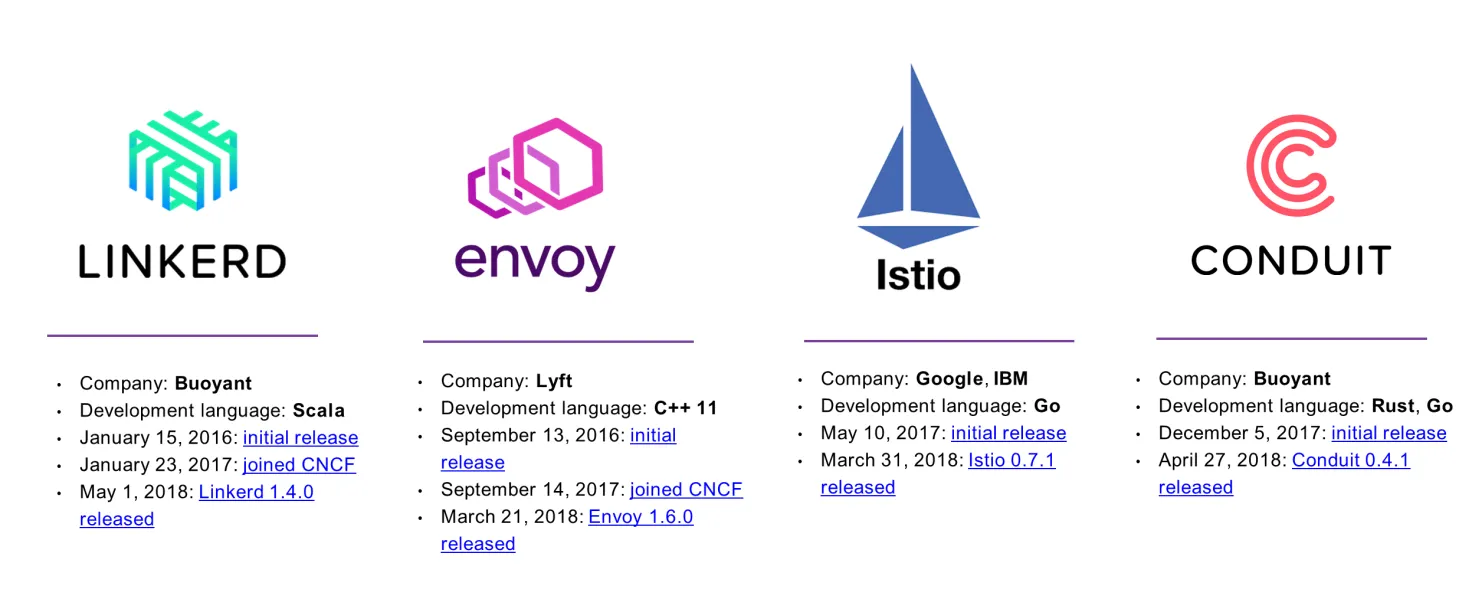
4. Comparison: Which Mesh to Choose?
| Feature | Istio | Linkerd |
|---|---|---|
| Proxy | Envoy | Linkerd2-proxy (Rust) |
| Complexity | High (Steep learning curve) | Low (Simply works) |
| Features | Extensive (VirtualService, Gateways) | Focused (Essentials) |
| Performance | Moderate overhead | Extremely lightweight |
| Best For | Large Enterprises, Complex Requirements | Startups, Kubernetes-native |
5. 👨💻 System Design Interview Tips
If you are asked about Microservices/Service Mesh in an interview:
💡 "When should you use a Service Mesh?"
Do NOT say: "Always." Better Answer: "I would introduce a Service Mesh when the complexity of managing network logic (retries, observability, security) in code exceeds the operational cost of managing the mesh itself. Usually around 20+ microservices or when strict Zero Trust security is required."
💡 "What are the downsides?"
- Latency: Each request goes through two extra hops (Source Proxy + Destination Proxy).
- Complexity: Debugging the mesh itself can be hard.
- Resource Cost: Sidecars consume CPU/RAM for every single pod.
💡 "How does it differ from an API Gateway?"
- API Gateway: Handles North-South traffic (External User → Cluster). Focuses on Auth, Rate Limiting for public APIs.
- Service Mesh: Handles East-West traffic (Service A ↔ Service B). Focuses on internal reliability and security.
6. Real-World Case Studies
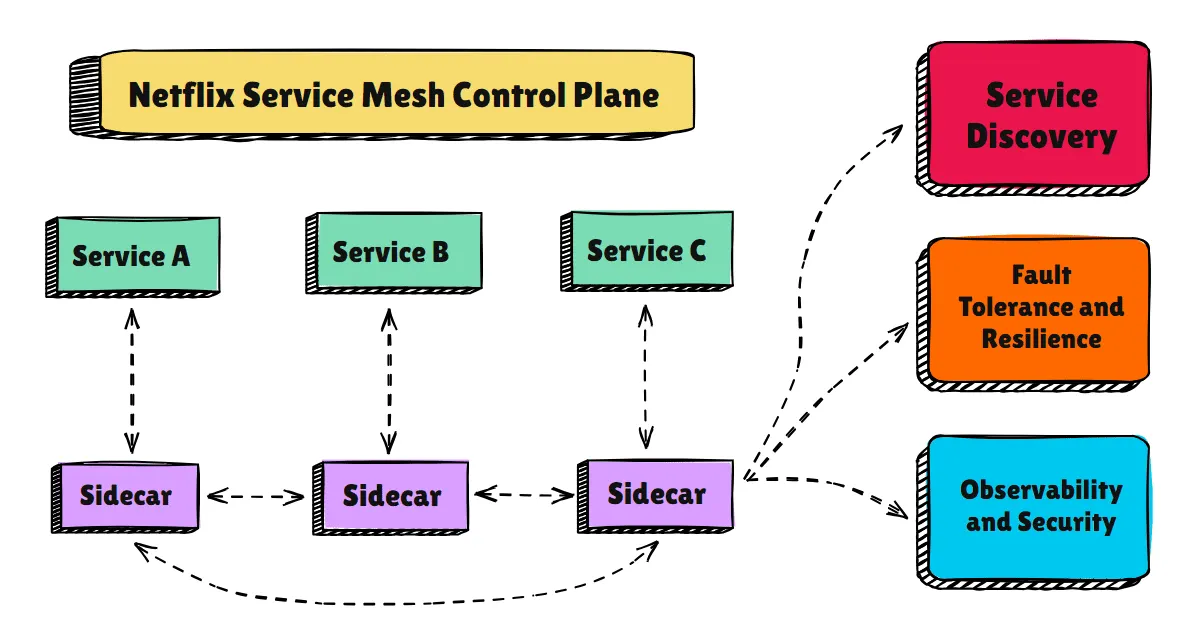
✅ Netflix
Netflix adopted service mesh principles to solve unreliable networks. By abstracting failure logic (Circuit Breakers) out of the application, they prevented cascading failures where one slow service brings down the whole platform.
✅ Airbnb
Airbnb migrated from a monolith to SOA (Service Oriented Architecture). They faced issues with inconsistent configuration. Using a mesh, they centralized their traffic control, allowing them to verify config changes safely before applying them globally.
7. Conclusion
A Service Mesh is not a silver bullet, but it is a powerful tool for taming the chaos of distributed systems.
- Start simpler: If you are small, use a library (like resilience4j) or a simple Ingress.
- Scale up: When you hit "Microservice Hell," bring in Istio or Linkerd.
Happy Designing! 🚀