
- Published on
- Views
How Big Companies Are Using AI Agents: Tech Stack, Security, Projects, and the Future
- Authors

- Name
- Javed Shaikh
Introduction
AI Agents are no longer experimental tools limited to research labs. Today, global enterprises are deploying AI agents in production to automate workflows, enhance decision-making, and dramatically improve productivity.
Unlike traditional chatbots, AI agents are goal-oriented systems capable of reasoning, planning, using tools, and interacting with enterprise systems autonomously — all within secure boundaries.
How Big Companies Are Using AI Agents
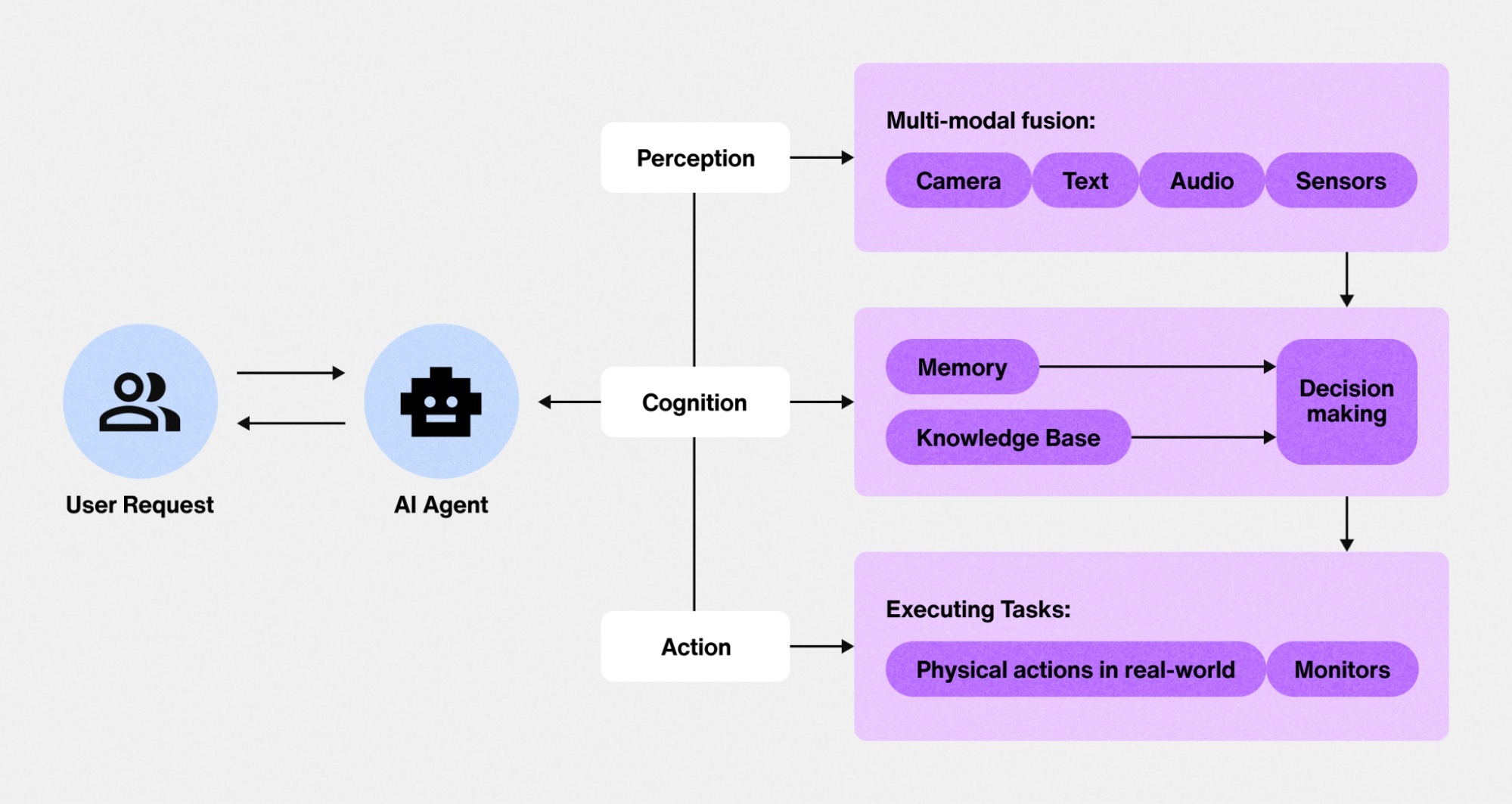
1. Workflow Automation & Productivity
Large organizations use AI agents to:
- Summarize reports and legal contracts
- Automate CRM updates and sales intelligence
- Draft technical and business documentation
- Perform data analysis and forecasting
- Assist developers with code generation and debugging
Example:
Oracle has introduced AI agents that automate sales reporting, multilingual customer interactions, and pipeline forecasting — reducing manual work for sales teams.
2. Customer Support & Experience
AI agents now:
- Resolve customer issues end-to-end
- Analyze sentiment in real time
- Personalize responses based on customer history
- Integrate with ticketing, billing, and CRM systems
Unlike traditional bots, these agents take actions, not just provide answers.
3. Supply Chain, Finance & Operations
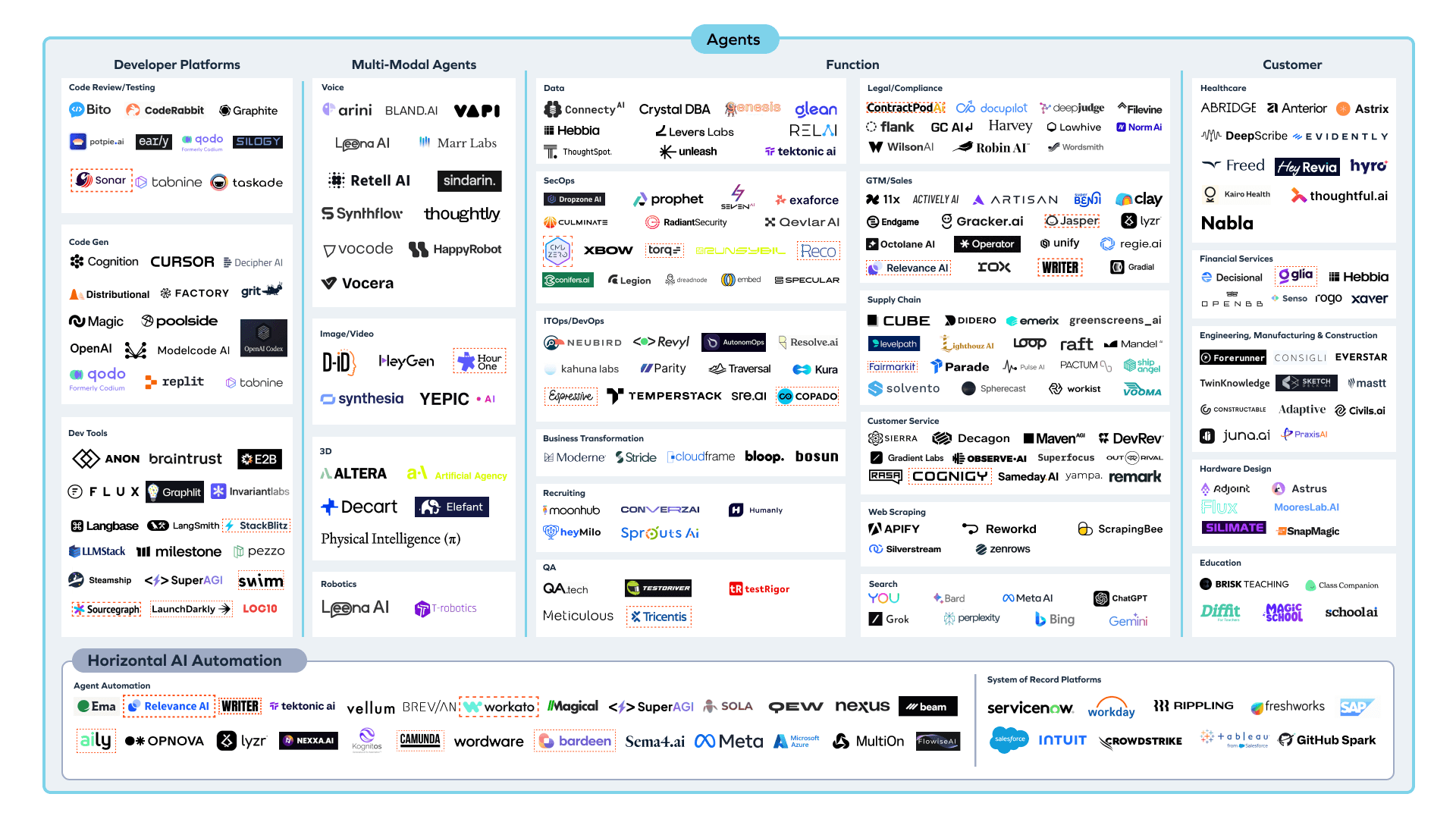
Enterprises use AI agents to:
- Optimize inventory and logistics
- Detect fraud and compliance risks
- Automate financial reconciliation
- Generate executive insights from raw data
Banks like JPMorgan and Morgan Stanley deploy private AI agents to assist advisors, analyze portfolios, and reduce research time.
Preferred Programming Languages for AI Agents
Most companies do not rely on a single language but adopt polyglot architectures.
Commonly Used Languages
| Language | Why It’s Used |
|---|---|
| Python | Core AI/ML development, orchestration, data pipelines |
| JavaScript / TypeScript | Frontend integration, dashboards, APIs |
| Java | Enterprise backends, scalability, security |
| Go | High-performance services and agent runtimes |
Popular Agent Frameworks
- LangChain
- AutoGen
- Semantic Kernel
- CrewAI
These frameworks allow agents to reason, plan, use tools, and coordinate with other agents.
Which LLM Models Enterprises Prefer (Security First)
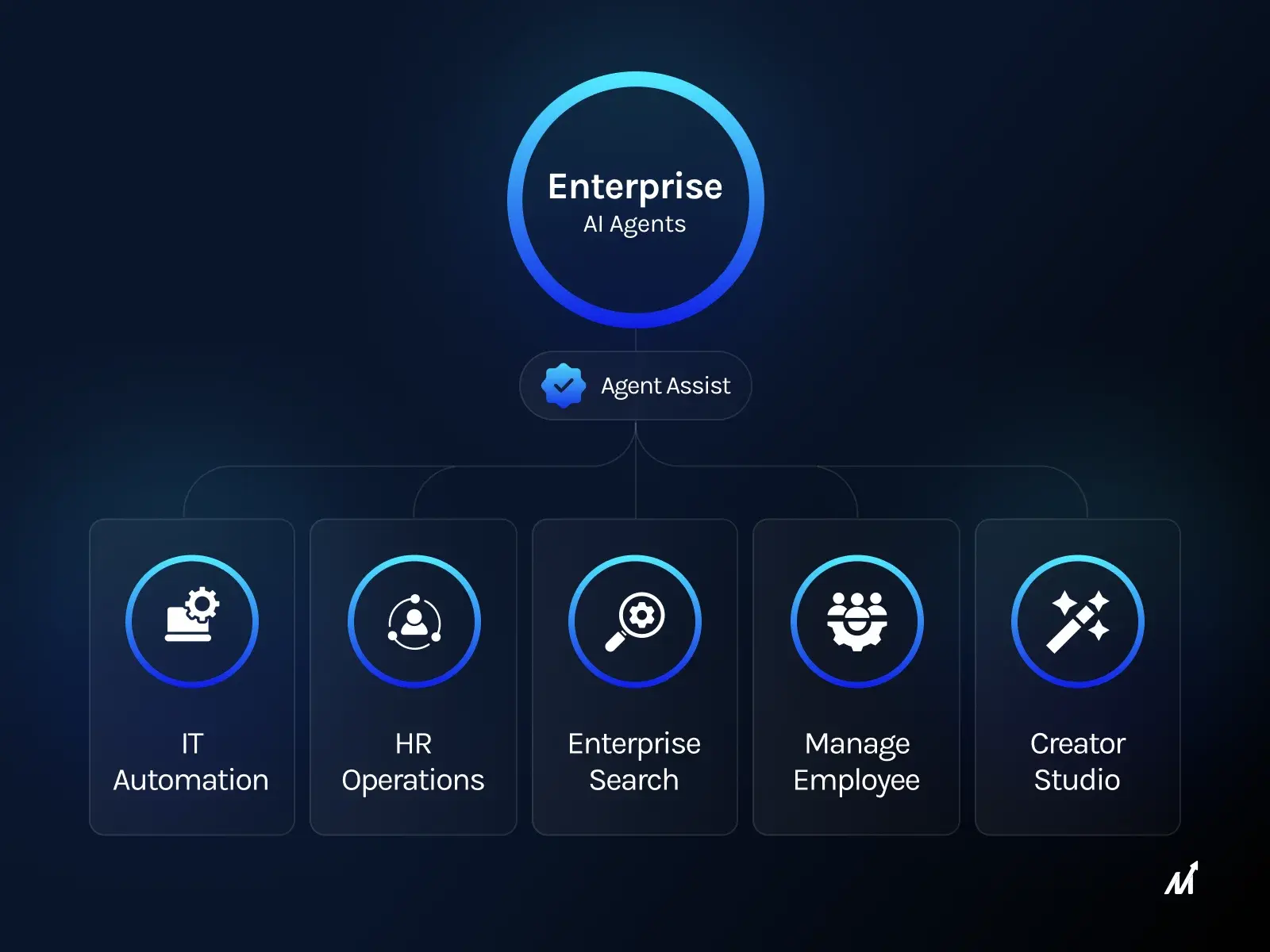
Preferred LLM Models
| Model | Enterprise Usage |
|---|---|
| GPT-4 / GPT-4.x | High-accuracy reasoning and automation |
| Claude (Anthropic) | Safety-focused enterprise workflows |
| LLaMA / Mistral | On-premise & private deployments |
| Custom Fine-Tuned Models | Banking, healthcare, compliance |
Why Security Matters
Big companies prioritize:
- Private model hosting
- On-premise or VPC deployments
- No training on enterprise data
- Strict audit logs & access control
AI agents operate under role-based permissions, ensuring they only access approved systems.
Projects Companies Are Building with AI Agents
Internal Enterprise Tools
- AI copilots for employees
- Automated HR and policy assistants
- Developer productivity agents
- Knowledge discovery systems
Customer-Facing Products
- Intelligent virtual assistants
- Personalized shopping and recommendation agents
- Voice-based AI support systems
Decision Intelligence
- Forecasting and analytics agents
- Risk assessment systems
- Compliance and contract review agents
How Companies Are Training Employees on AI Agents
Training Strategies
Companies invest heavily in AI upskilling programs:
- Hands-on workshops with AI tools
- Internal AI certifications
- Role-based AI training (engineering, sales, HR)
- AI-powered learning platforms
Many enterprises even use AI agents to train employees, creating personalized learning paths.
The Future of AI Agents in Enterprises
What’s Coming Next
- AI agents embedded into ERP, CRM, and DevOps tools
- Autonomous execution of complex workflows
- Multi-agent collaboration systems
- Stronger governance, monitoring, and compliance frameworks
AI agents will become digital coworkers, not just assistants.
What Engineers Need to Learn About AI Agents
Core Skills Required
- Python or JavaScript fundamentals
- LLM concepts and prompt engineering
- Agent orchestration frameworks
- Vector databases and RAG pipelines
- API integration and automation
- AI security and governance basics
How Much Knowledge Is Enough?
You do not need a PhD in AI.
A strong software foundation + hands-on experimentation with AI agents is sufficient to become productive in enterprise environments.
Final Thoughts
AI agents are reshaping how companies build software, serve customers, and operate at scale. Enterprises that adopt agent-based systems early gain massive productivity and competitive advantages.
For engineers, learning AI agents today is equivalent to learning cloud computing a decade ago — it’s becoming a core skill, not a niche specialization.
Next Step:
If you're a software engineer or architect, now is the best time to start building real AI agents, not just reading about them.