
- Published on
- Views
Q-Day 2029: Why the Quantum Doomsday is Already a Cybersecurity Crisis
- Authors

- Name
- Javed Shaikh
1. Introduction: The Quantum Countdown
Imagine a vault. Inside this vault lies your entire digital life—your bank account details, private chat history, health records, crypto wallets, and even the security codes for national power grids.
This vault isn’t locked with a physical key. Instead, it is locked with a mathematical puzzle so complex that it would take the world’s fastest supercomputers billions of years to solve. Because of this, you sleep soundly at night.
Now, imagine a machine that doesn't just solve that puzzle—it shatters it in seconds.
This is the promise and the peril of quantum computing. And according to security researchers at Google, the key to that vault could be broken by 2029.
This looming deadline is known in cybersecurity circles as Q-Day—the day when quantum computers become powerful enough to defeat traditional cryptography.
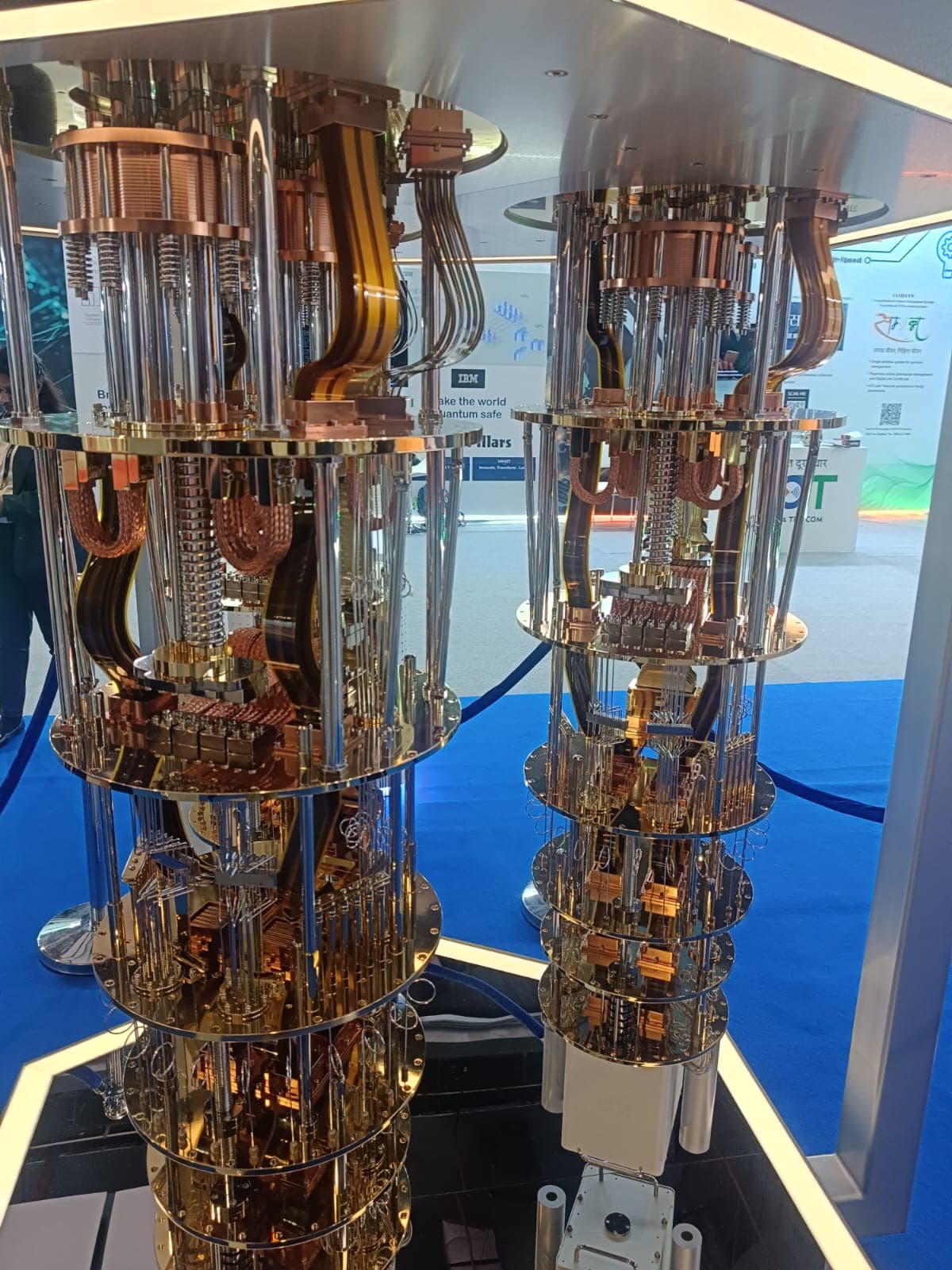 A real IBM Quantum Computer system, illustrating the complex engineering required to operate qubits at near absolute zero.
For years, Q-Day was treated as a distant, theoretical problem—something for the year 2040 or beyond. But a series of aggressive timeline updates, spearheaded by Google's Quantum AI team, has forced the tech industry and governments worldwide to panic. The countdown is officially on, and we have less than three years to rewrite the security rules of the internet.
2. What is Q-Day and Why did the Timeline Shift?
Traditional cryptography—like RSA (Rivest-Shamir-Adleman) and ECC (Elliptic Curve Cryptography)—protects almost 99% of all digital communications today. These systems rely on mathematical problems that are easy to perform in one direction but virtually impossible to reverse. For example, multiplying two massive prime numbers is easy for a computer, but finding the prime factors of a huge 2048-bit number (factoring) is incredibly slow.
Enter quantum computers. By using the principles of quantum mechanics—specifically superposition and entanglement—quantum computers use "qubits" instead of classical bits (0s and 1s). A qubit can exist as a 0, a 1, or both simultaneously. This allows quantum computers to process multiple possibilities at once.
In 1994, mathematician Peter Shor published Shor’s Algorithm, proving that a sufficiently powerful quantum computer could factor large numbers almost instantly, rendering RSA and ECC obsolete.
graph TD
    A[Classical Cryptography RSA/ECC] -->|Easy to Encrypt| B(Secure Data)
    B -->|Impossible to Decrypt without Key| C[Classical Supercomputer: Billions of Years]
    B -->|Shor's Algorithm| D[Quantum Computer: Seconds]
    style D fill:#f96,stroke:#333,stroke-width:2px
The 2029 Shift
For a long time, building a quantum computer with enough qubits to run Shor's Algorithm seemed decades away. However, in May 2025, Craig Gidney, a leading researcher at Google Quantum AI, published a groundbreaking paper.
Gidney demonstrated that by using optimized error-correction techniques, a quantum computer with fewer than one million physical qubits could factor a 2048-bit RSA integer in under a week.
Previously, scientists believed we would need tens of millions of qubits. By dropping the hardware requirements so drastically, Google effectively moved the deadline for Q-Day forward to 2029.
3. The Jiuzhang 4.0 Breakthrough: A Glimpse of the Power
If you need proof of how fast this technology is moving, look no further than China’s latest optical quantum computer, Jiuzhang 4.0, unveiled by researchers at the University of Science and Technology of China (USTC) in April 2026.
In a laboratory environment, Jiuzhang 4.0 solved a complex mathematical problem called Gaussian Boson Sampling in just 25 microseconds.
To put that into perspective:
- Jiuzhang 4.0: 25 Microseconds
- El Capitan (The world's fastest classical supercomputer in the US): 1 tredecillion years ( years)
While this calculation was performed in a highly controlled, specific test setting (meaning it cannot yet be used to hack bank accounts or send emails), it serves as a stark reminder of the astronomical gap in computing speed between classical and quantum systems. Once these machines are made fully programmable, classical security measures won't stand a chance.
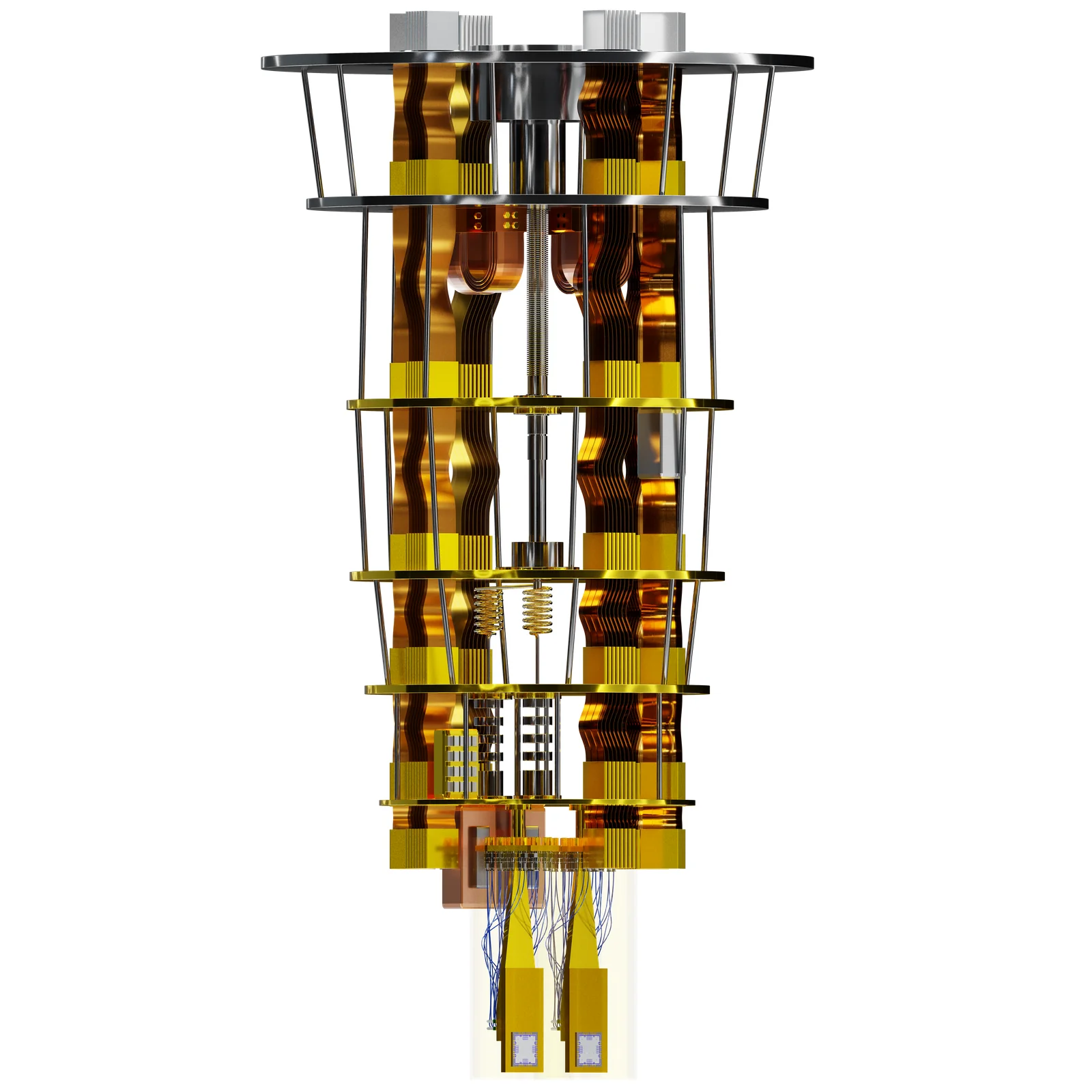 A modern dilution refrigerator hosting quantum processors, cooling the qubits to near absolute zero to maintain stability.
4. The Silent Threat: "Store Now, Decrypt Later" (SNDL)
You might think, "If quantum computers capable of cracking encryption won't exist until 2029, why should I care today?"
The answer lies in a highly coordinated, silent threat vector known as SNDL: Store Now, Decrypt Later.
State-sponsored hackers, intelligence agencies, and advanced cybercriminal syndicates are not waiting for 2029. They are actively intercepting and downloading massive volumes of encrypted data right now.
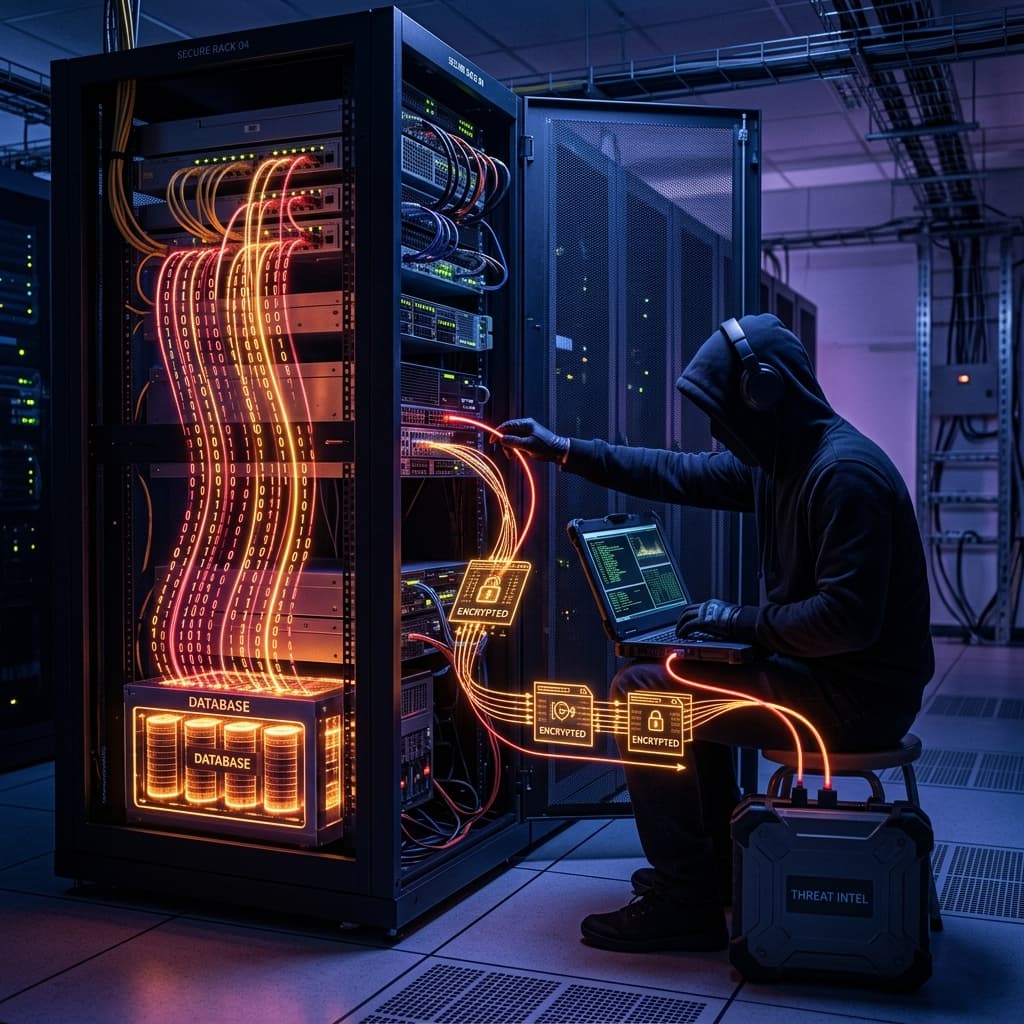 Hackers are actively intercepting and storing encrypted network traffic today, ready to decrypt it the moment quantum computers are live.
They cannot read your encrypted bank transfers, corporate emails, or state secrets today. But they are storing them on high-capacity servers. Once a fault-tolerant quantum computer becomes available in 2029, they will run Shor's algorithm on their stash of stolen data, retroactively exposing a decade's worth of digital secrets.
If you don't secure your data with quantum-resistant keys today, your current secrets are already compromised.
5. The Fallout: Banking, Crypto, and Cybersecurity
A sudden Q-Day breach would cause systemic global collapse. Let’s break down how this impacts the pillars of our digital economy:
Banking and Finance
Your mobile banking app uses HTTPS (which relies on RSA/ECC) to establish secure connections. If a hacker has a quantum computer, they can perform a "man-in-the-middle" attack, hijack your session, and clean out your bank account. Furthermore, historical financial records stored by institutions would be vulnerable to retrospective decryption.
Cryptocurrency and Blockchain
Blockchain is often touted as unhackable, but the wallets themselves are highly vulnerable. Public keys are visible on the blockchain ledger, and the private keys are derived using elliptic curve cryptography (specifically Secp256k1 in Bitcoin and Ethereum).
If a quantum computer can easily derive a private key from a public key, any wallet that has ever broadcasted a transaction could be drained in minutes. Analysts estimate that over $3 trillion in digital assets could vanish overnight if blockchains do not transition to quantum-safe structures.
Cybersecurity and Defense
Government communications, military intelligence, and critical infrastructure control systems (like nuclear reactors and water treatment plants) rely on encrypted pathways. A Q-Day leak would expose national defense strategies and allow adversaries to shut down grids remotely.
6. The Shield: Post-Quantum Cryptography (PQC)
The good news is that the cybersecurity industry is not sitting idle. The primary defense against Q-Day is Post-Quantum Cryptography (PQC)—algorithms running on classical computers that are designed to be secure against both classical and quantum attacks.
The National Institute of Standards and Technology (NIST) in the United States led a multi-year global competition to standardize these algorithms. In 2024-2025, NIST finalized the first three official standards:
| NIST Standard | Original Name | Primary Use Case | Cryptographic Basis |
|---|---|---|---|
| FIPS 203 (ML-KEM) | CRYSTALS-Kyber | General encryption and key exchange (e.g., securing HTTPS) | Module Lattice-based |
| FIPS 204 (ML-DSA) | CRYSTALS-Dilithium | Digital signatures (e.g., verifying identities, signing updates) | Module Lattice-based |
| FIPS 205 (SLH-DSA) | SPHINCS+ | Alternative digital signatures (stateless hash-based signatures) | Symmetric hash-based |
Instead of relying on the difficulty of factoring numbers, these algorithms rely on complex geometric structures called lattices in thousands of dimensions. Solving these lattice problems is mathematically proven to be incredibly hard for both classical and quantum computers.
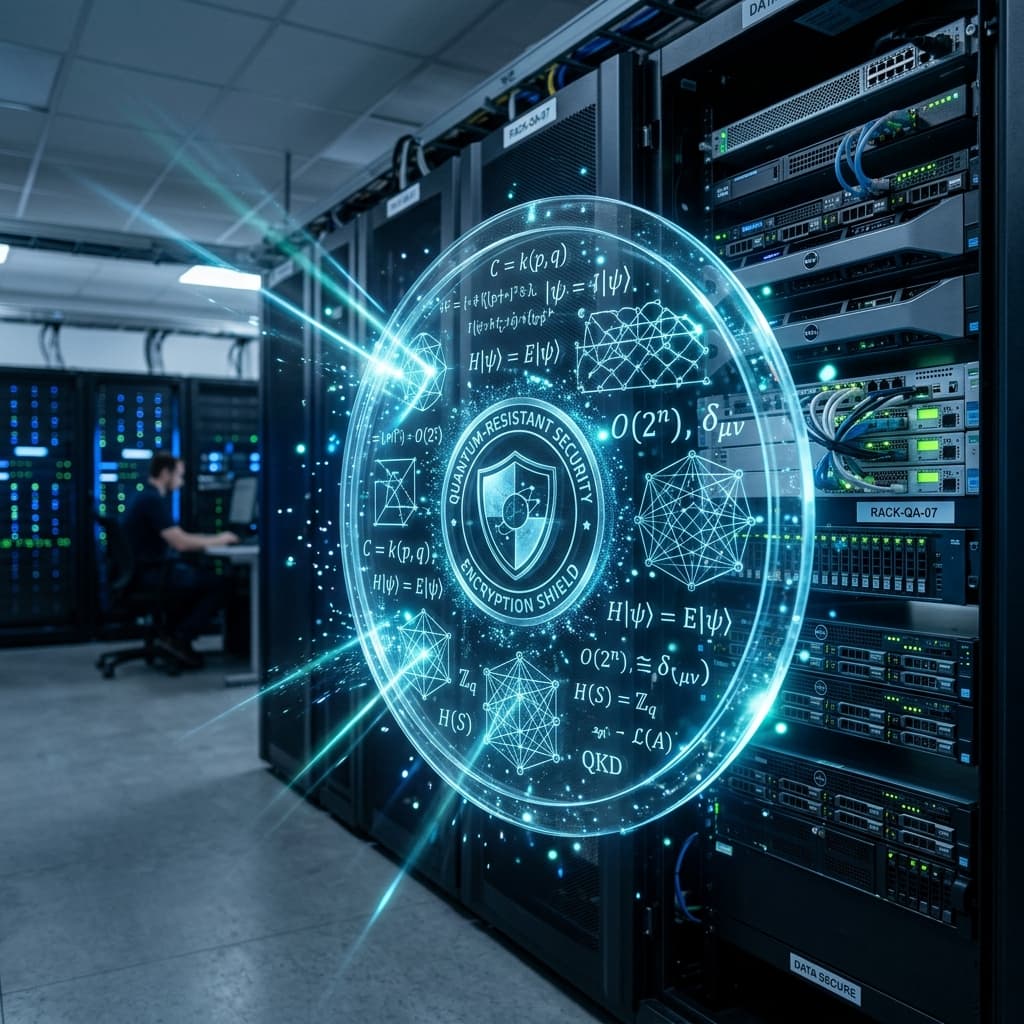 Post-Quantum Cryptography relies on multidimensional mathematical lattices to create unbreakable digital shields.
Real-World Adoption Has Begun
The migration is already quietly happening behind the scenes:
- Apple iMessage recently introduced PQ3, a cryptographic protocol that combines classical ECC with Kyber to protect messages against "Harvest Now, Decrypt Later" attacks.
- Google Chrome has deployed hybrid key exchanges (X25519 + Kyber) to protect web browsing sessions.
- Amazon AWS supports hybrid post-quantum key exchange in its Key Management Service (KMS).
7. Global Mobilization: India's Leap to 2029
Countries are treating Q-Day as a matter of national security, and India is positioning itself as a major leader in quantum resilience.
Through the National Quantum Mission (NQM)—supported by the Ministry of Electronics and Information Technology (MeitY)—India is investing heavily in building both sovereign quantum computers and quantum-safe security systems.
Under the leadership of Ajai Chowdhry (Chairman of the NQM and Co-Founder of HCL), India has laid out a strict timeline to address the quantum threat:
- 2028–2029 (Critical Infrastructure): The Securities and Exchange Board of India (SEBI) announced a proactive plan mandating that India's capital markets, banking infrastructure, and defense communications transition to quantum-safe cryptography by 2029.
- 2033 (Broader Ecosystem): The migration of the general Indian digital ecosystem, commercial enterprises, and governance portals will be completed.
By building its own 64-qubit quantum processors and aiming for a 1,000-qubit system, India is ensuring it reduces dependencies on foreign hardware while securing its digital borders before the 2029 threshold.
8. Summary Checklist: Is Your Organization Quantum-Safe?
If you are a system architect, developer, or business owner, here is how you should prepare for the quantum migration:
- Audit Your Encryption: Map out every part of your infrastructure that uses RSA or ECC (check SSH keys, TLS certificates, database encryption, and API gateways).
- Enable Hybrid Cryptography: Implement hybrid algorithms (combining classical and post-quantum keys) to ensure compatibility and immediate protection against SNDL attacks.
- Track NIST Standards: Transition from experimental implementations to finalized standards like ML-KEM and ML-DSA.
- Establish Crypto-Agility: Design your systems so that cryptographic algorithms can be swapped out easily via configuration without rewriting core codebases.
Conclusion: The Race Against Time
Q-Day is not a science-fiction scenario; it is a software engineering deadline.
The record-breaking speeds of prototype quantum systems like Jiuzhang 4.0 prove that the underlying physics is solid. The Gidney paper from Google proves that the software logic is optimized. Now, it is simply a race to build the hardware.
For developers and tech organizations, the challenge is clear: we must migrate our systems to Post-Quantum Cryptography before the clock strikes 2029. The security of our digital civilization depends on it.
Are you ready for the quantum era? 🛡️